By Ramachandran Rajeev Kumar — 2026-07-21
India has solved this kind of problem before.
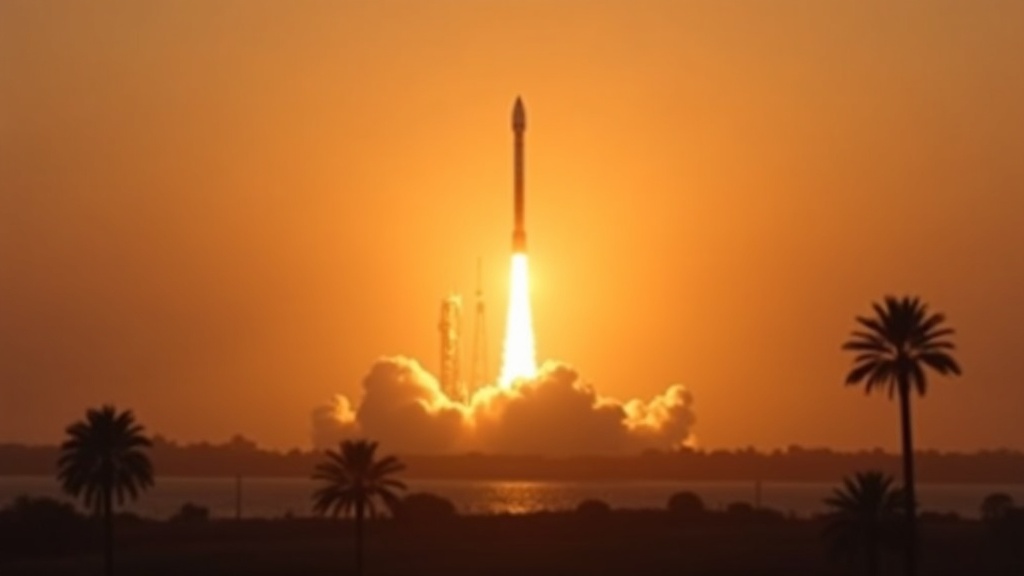
In 2013 it sent a spacecraft to Mars for less than the budget of a Hollywood film about being lost in space. The joke wrote itself then and instructs us now, because the punchline was never the thrift — it was the institutional design that made the thrift possible. ISRO was mission-funded, profit-exempt, patient across decades, and staffed by engineers given one clear strategic objective insulated from quarterly arithmetic. Nobody asked the Mars Orbiter Mission for a revenue model. It was built because a capability the market would never carry was judged necessary for the nation to hold.
Part 1 of this series ended at a paradox: the AI frontier is a furnace no company can profitably hold, the durable holders will therefore be states, and the state holding it most aggressively ships its capability as free weights that carry its ecosystem and worldview into every downloading country — India's developer community enthusiastically included. The commentariat meanwhile debates a chair in Shanghai. The actual decision facing India is a budget line. Here is what it should say.
The Crack in the Monopoly
Begin with the layer everyone assumes is hopeless: hardware. The assumption deserves updating, because the monopolist is inviting its own insurgency.
Nvidia's grip on frontier training remains near-absolute, and contesting it this decade would be foolish. But the market's centre of gravity is shifting from training to inference — the everyday serving of models to actual users — and inference is precisely where the moat runs thinnest. Serving a distilled open model does not require Nvidia's blessing; it runs on AMD's accelerators, on Google's TPUs, on a lengthening queue of specialised inference silicon. Nvidia's own posture accelerates the shift: gross margins in the seventy-per-cent range are a standing invitation to every competitor, its allocation decisions favour the largest buyers, and Washington's export regime has converted it — through no commercial choice of its own — into a geopolitically metered vendor. Its own annual report concedes it is "effectively foreclosed" from China's data-centre market. A supplier that expensive, that selective and that meterable is a supplier the world is already organising to route around. China routed around it under compulsion, building the Ascend stack because it was locked out. India can route around it by choice, because it can see the lock from here.
Now note the happy coincidence: India's national demand profile is almost entirely the contestable segment. India does not, today, train frontier models. What India needs at population scale is inference — cheap, abundant, everywhere — plus fine-tuning. The quiet evidence that officialdom already senses this sits in the IndiaAI Mission's own third compute tender, which included over a thousand Google TPUs alongside the GPU order. The diversification has begun. Nobody has yet named it as doctrine.
Name it. The silicon plank of an Indian AI doctrine is not a Blackwell rival; it is fabless Indian inference chips on mature manufacturing nodes — the class of process India's fab programme is actually building toward, and a class in which credible inference silicon has already been demonstrated globally. India hosts, by widely cited industry estimates, something approaching a fifth of the world's semiconductor design workforce, currently designing for foreign flags. This is a repatriation problem, not a creation problem. Frugal engineering against a seventy-per-cent-margin incumbent: India has run this play before, against harder physics.
Localisation Is the Market — and the Trap
The second plank concerns where AI is actually going, which is not where the frontier-race coverage points. General-purpose AI is becoming more localised, and it should. Small models now do what frontier models did eighteen months ago; distillation keeps pouring capability downhill; on-device inference improves by the quarter. And the economics of India enforce the trend better than any policy could: a farmer's crop query in Bhojpuri, a ration-card dispute in Tamil, a first-generation student's doubt in Marathi — none of this needs a trillion-parameter model, and none of it can pay for one. Low ARPU, twenty-two scheduled languages, voice-first users: India's market physics demand small, local, cheap.
This is the one arena where India is structurally the home team. The Indic linguistic corpus — the speech, the code-switching, the registers of a billion people — is data neither San Francisco nor Hangzhou holds at anything like India's depth, and none of what they do hold is on India's terms. Localised AI is not India's consolation prize for missing the frontier race; it is the delivery layer of the century's largest deployment market, and India owns the raw material.
But Part 1's warning applies with full force here, and it is the hinge of the whole doctrine: localisation on top of a foreign base model is not sovereignty — it is dependency with an Indian accent. A Tamil fine-tune of a Chinese model inherits the skeleton's worldview wholesale: its refusals, its assumptions, its silences. Local skin, foreign skeleton. If the base layer beneath India's thousand localised applications is aligned elsewhere, then India will have built the world's most vibrant vernacular interface to someone else's mind.
One Lab, Not Forty Schemes
Which forces the third plank, the one India keeps declining to fund: a sovereign frontier-credible base model, built by a mission-funded laboratory on ISRO's institutional design.
The standard objection — India lacks the resources — expired quietly over the past eighteen months. When a Hangzhou laboratory can report a headline training-run cost in the single-digit millions of dollars — a figure contested, fairly, as excluding the research runs and infrastructure behind it, which push the true bill into the hundreds of millions and beyond — the barrier is still not capital: even the skeptics' fully loaded estimate is a fraction of the American burn rate. What India lacks is what the objection conveniently obscures: concentration. One laboratory rather than forty pilot schemes. One obsessive engineering culture rather than a services industry optimising margins. State patience measured in years rather than news cycles. And the will to repatriate the researchers who currently push the frontier — in California, under other flags. The talent is Indian — Stanford's AI Index ranks India first in the world in AI skill penetration. The addresses are not. Funding to explore, exempt from profit timelines, is precisely the instrument that brings them home, because it is the one thing no Indian private employer offers and the thing frontier researchers most consistently say they want.
Be clear-eyed about what this laboratory is for. Not profit — Part 1 established that the frontier returns none for years, possibly ever, to those who race it commercially. Not prestige. It exists so that the default weights a billion Indians build upon — the skeleton under the Tamil tutors and the Bhojpuri crop advisors — are aligned in India. BharatGen and its sibling efforts are honourable beginnings at the language layer; sovereignty requires the base layer. The furnace argument is not a reason to stay out of the fire. It is the reason only the state can walk in.
The Doctrine, Stated
Assemble the planks and the doctrine fits in a paragraph. Let the giants burn capital at the frontier and harvest their fallout as consumer surplus. Attack the silicon layer where the monopolist is weakest and Indian demand is largest: fabless inference chips on mature nodes, designed by repatriated Indian talent. Build the delivery layer where India is the home team: localised, small, voice-first, twenty-two languages deep. And underneath it all, fund the one thing no market will fund — a mission-grade sovereign base model — so that localisation stands on an Indian skeleton. Four lines, one acronym-shaped precedent — a budget, not a communiqué.
And then, only then, return to the chair in Shanghai — because the doctrine answers the diplomacy question as a by-product. A nation executing this programme can engage WAICO whenever and however it suits: observer, member, critic, counter-convenor. The engagement conditions Syed Akbaruddin, India's former permanent representative to the United Nations, has laid out — independent audits, balanced staffing, an appeals process — become terms India states from strength rather than pleads from anxiety. The window that closes at the end of July will be litigated as though it were the decision of the decade. It is not. The decision of the decade is whether the next Union budget contains one line that no ministry has yet drafted, doing for intelligence what a previous generation's budget line did for orbit.
India has the talent. The ticket price has collapsed. The only question left is the one ISRO has been answering since 1969: whether the Indian state can want a capability patiently enough to pay for it without asking when it turns a profit.
Mars was further away.